
Bank of England Holds Rates at 3.75%: What It Means for Property Investors
5 min read


7 min read
Prime Minister Andy Burnham has unveiled Your First Home: a 2.5% deposit and a 20% government equity loan on new-build homes for first-time buyers in England. Full details come at the 28 October Budget. Here is what it means for buyers and investors.

Prime Minister Andy Burnham has unveiled the Your First Home scheme: a 2.5% deposit and a 20% government equity loan on new-build homes for first-time buyers in England. Full terms follow from Chancellor John Healey at the 28 October Budget, but the headline already raises the obvious question, does it work, and what does it mean for new-build investors?
The scheme is built around two levers. A buyer puts down a deposit of just 2.5% of the purchase price. The government then lends 20% of the value as an equity loan, which is interest-free at the outset. A standard residential mortgage covers the rest. It is restricted to first-time buyers, to new-build homes, and to England.
Watch: The Your First Home scheme, explained
A quick breakdown of the 2.5% deposit, the 20% government loan, and what is still to be confirmed at the Budget.
Put numbers on it. On a £230,000 new-build, the buyer needs £5,750 up front. The government lends £46,000. A mortgage covers the remaining £178,250 (77.5% of the price). That is a materially smaller cash hurdle than the market norm, where a 10% deposit on the same home would be £23,000.
One caveat worth repeating: the interest-free period, the price ceilings and the household income limits have not been published. Those details decide how generous, and how risky, the scheme really is, and they land at the 28 October Budget.
Quick FAQ:
Q: When do the full rules take effect?
A: The core terms (2.5% deposit, 20% equity loan) were announced at the Labour conference, but the detail, including income and price caps and how long the loan stays interest-free, is confirmed at the Budget on 28 October. Treat everything below the headline numbers as provisional until then.
For most first-time buyers, the deposit is the wall, not the monthly payment. Saving five figures while paying rent is what pushes the first purchase years into the future. By halving the deposit to 2.5%, Your First Home attacks exactly that barrier, and by keeping the equity loan interest-free at the start it holds the early monthly cost down too.
On a £230,000 home, a 2.5% deposit is £5,750, against £11,500 at 5% and £23,000 at 10%. Lowering the deposit brings the purchase forward by years for a saver who is otherwise stuck. It does not, however, lower the price of the house.
The trade-off is that a smaller deposit means a larger mortgage relative to the buyer's own stake, and less of a cushion if prices dip. That is not a reason to dismiss the scheme, but it is the reason the history below matters.
Your First Home is, in all but name, a successor to Help to Buy: Equity Loan, which ran in England from 2013 until its final completions in 2023. The mechanics are close enough that its record is the best guide we have to how this one might play out.
| Help to Buy: Equity Loan | The record, 2013 to 2023 |
|---|---|
| Homes bought | 387,195 |
| Bought by first-time buyers | 328,346 (85%) |
| Total lent as equity loans | £24.7 billion |
| Could not have bought at all without it | 37% |
| Could have bought their chosen home anyway | 31% |
| New-build premium vs second-hand | 15 to 20% |
On the access question, the scheme delivered. It put nearly 390,000 people into homes, the overwhelming majority of them first-time buyers, and the National Audit Office's 2019 review found that 37% of buyers could not have purchased any property without it. Total lending reached £24.7 billion across its life, according to the government's final Help to Buy statistics.
Quick FAQ:
Q: Is this just Help to Buy with a new name?
A: The core design (a small deposit plus a government equity loan on new-builds) is nearly identical. The differences are in the dials: a lower 2.5% deposit, first-time-buyers only from day one, and terms still to be confirmed at the Budget. The precedent is close enough that Help to Buy's results are the fairest guide.
Rothmore sends fresh UK property investment opportunities straight to your inbox: off-market deals, exclusive offers and access to new-launch projects. Be the first to know, every week.
Register for weekly updates here

The record is not all one way. The same NAO review that praised access also flagged real costs. Around 31% of Help to Buy buyers could have bought the home they wanted without the loan, so a meaningful slice of the subsidy went to people who did not strictly need it. And while buyers using the scheme paid less than 1% more than a comparable new-build bought without support, new-builds themselves typically carry a 15 to 20% premium over an equivalent second-hand home.
A smaller deposit gets you through the door sooner. It does not lower the price of the house, and on a new-build you are often paying a premium to begin with.
The Help to Buy lesson, in one line
The honest reading is that Help to Buy widened access without making housing cheaper, and arguably supported prices and developer margins along the way. Whether Your First Home avoids the same critique depends almost entirely on the supply side: if it is paired with genuinely more building, it helps buyers; if demand support runs ahead of supply, it risks feeding straight into prices. Angela Rayner's supply and empty-homes measures are, on that logic, the more important half of the announcement.
| Help to Buy (2013-2023) | Your First Home (2026) | |
|---|---|---|
| Minimum deposit | 5% | 2.5% |
| Government equity loan | 20% (40% in London) | 20% |
| Who qualified | All buyers, then FTB-only from 2021 | First-time buyers only |
| Property type | New-build only | New-build only |
| Coverage | England | England |
| Interest-free period | First 5 years | Interest-free at outset (length TBC) |
The direction of travel is clear: a lower deposit and a tighter focus on first-time buyers. The lower 2.5% deposit is the most consequential change. It opens the door to more buyers, but it also thins the equity cushion, which raises the negative-equity risk if prices soften in the early years. On our reading, expect Your First Home to lift new-build transaction volumes and support developer pipelines, particularly outside London where the 20% loan stretches furthest. What it does to prices is the open question, and the answer sits with the supply measures rather than the scheme itself.
Quick FAQ:
Q: Could a 2.5% deposit leave buyers in negative equity?
A: It raises the risk. With only 2.5% of the buyer's own cash in the property, even a modest price fall in the first couple of years could wipe out that stake. The 20% government loan absorbs some of the shock, but buyers should go in understanding that a small deposit means a smaller cushion.
Your First Home is a first-time-buyer scheme, so it does not directly help an investor purchase. Its relevance is indirect but real: it channels demand and public money straight into the new-build market that Rothmore's investors already build in and hold.
Subsidising 2.5% deposits pulls more first-time buyers into new-build stock, the exact asset class new-build investors are exposed to.
A larger pool of scheme-backed owner-occupiers means more potential buyers when an investor comes to sell a new-build apartment.
England-only and new-build-only means the effect concentrates in core markets like Manchester, Birmingham, Leeds and Liverpool.
← swipe / scroll →
The Help to Buy era is a useful precedent here too: developer demand held up through it, and the resale market for former Help to Buy homes remains active. The watch-item is the same one buyers face. If the scheme lifts prices faster than incomes or rents, yields compress; if it mainly deepens the buyer pool without a price spike, it is a clean positive for new-build liquidity. Either way, the smart position is to focus on well-priced new-build stock in high-demand English cities rather than to chase the subsidy itself.
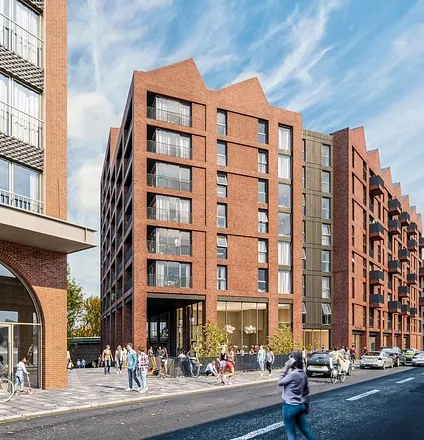
Explore: Pall Mall Square, Liverpool
A new-build development of 145 fully furnished apartments in central Liverpool, with short-let approval and projected yields up to 13%. Exactly the kind of new-build stock this scheme is designed to energise. Request the investor info pack.
Three related pieces worth your time:
Fresh UK property market updates for investors: regeneration, yields, tax rules and monthly rental data, all in one hub. Read the latest here.

Whether you're an investor or a homeowner, Rothmore Property provides expert guidance, market insights, and tailored solutions to support your property purchase.
Gain insights into property market trends, economic growth, and rental demand.

Rothmore specialises in connecting clients with the UK’s finest new-build developments.

Discover your property’s value with Rothmore. Our expert valuation services provide accurate assessments to support your next move.

Rothmore specialises in connecting clients with the UK’s finest new-build developments.