Bank of England Holds Rates at 3.75%: What It Means for Property Investors
5 min read


7 min read
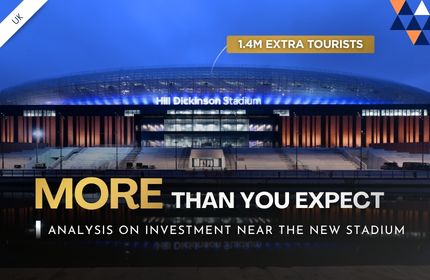
Buying property near Everton's new stadium sounds like a sure thing, but matchday demand is spikier than it looks. This guide explains what visitor and event demand really does for landlords near Bramley-Moore Dock, and how to invest around it sensibly.
Buying property near Everton stadium sounds like a sure thing since the Hill Dickinson Stadium opened at Bramley-Moore Dock, but the demand is spikier than it looks. This guide covers what buying near the ground really means, whether matchday and visitor demand actually helps a landlord and how to spot the opportunity behind the hype.
Jump to section:
The Hill Dickinson Stadium is a roughly £750m, 52,769-seat ground built on the reclaimed Bramley-Moore Dock in Vauxhall, just north of Liverpool city centre. It opened for competitive football in August 2025, and it sits inside Liverpool Waters, the wider regeneration of the northern docks. Buying property near it usually means one of two things: a new-build apartment in that northern waterfront zone, or an existing home in the surrounding Vauxhall and city-fringe streets.
Watch: Property Near Everton Stadium and Liverpool's North Docks
A quick look at the demand story behind Everton's new stadium and Liverpool's North Docks.
The pull is obvious. Everton's own estimates put the stadium at around 1.4 million additional visitors a year, alongside roughly 15,000 jobs and a £1.3bn boost to the local economy over time. Those are the club's projections rather than independently audited figures, so treat them as direction of travel, but the direction is clearly upward. The important detail for an investor is not the size of those numbers. It is when they happen. Football and event demand arrives in concentrated bursts, and that shapes which letting strategy actually benefits.
The stadium in numbers: big, but concentrated
Why timing matters more than the headline figure. Source: Everton FC regeneration estimates.
~1.4m extra visitors a year
52,769 seats on a matchday
~20 to 25 home match and event nights a year
Bars are illustrative and not to a single scale: they show that a large annual visitor figure lands across a small number of concentrated dates, which is what shapes the right letting strategy.
Quick FAQ:
Q: Is it worth buying property near Everton's stadium?
A: It can be, but not simply because the stadium is there. The opportunity depends on the property working for everyday Liverpool renters first, with matchday and visitor demand adding upside on top. A home that only makes sense on event days is a weak investment.
This is where honesty matters. A Premier League club plays around 19 home league games a season, plus a handful of cup ties and the occasional concert or event. That means genuine matchday demand lands on roughly 20 to 25 nights a year, not every weekend. It is real, and on those nights it can be intense, but it is spiky rather than constant. A standard tenant paying a fixed monthly rent does not benefit from it at all, because the rent is the same whether Everton are at home or away.
Where the demand does show up is in short-stay accommodation. Big one-off events can push nightly short-let rates several times higher than normal, as we saw across Manchester during the Oasis reunion weekend, covered in our EURO 2028 stadiums investor strategy. A stadium adds a steady drumbeat of these smaller spikes across a season, on top of the everyday visitor, business and tourism demand Liverpool already has. So the honest answer is that matchday demand helps, but mainly for investors set up to capture short stays, and only as a top-up to a property that already earns its keep the rest of the year.
The area around the stadium is one of several Liverpool zones where demand and regeneration are shifting fast. Our free Liverpool Property Investment Guide sets out our analysis of the regeneration projects and specific areas, including the North Docks and waterfront, that we think work best for investors, alongside price context, an area-by-area breakdown and the latest available homes. Download it to see where the strongest opportunities sit before you commit.

Quick FAQ:
Q: Does matchday demand actually make money for landlords?
A: Only for the right model. A standard tenancy sees no benefit, since the rent is fixed. Short-let and serviced-accommodation operators can charge more on the 20 to 25 event nights a year, but that income sits on top of everyday demand, it does not replace it.
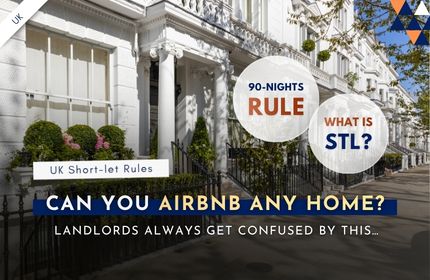
If matchday and visitor demand is the draw, the letting model decides whether you actually capture it. A short-let or serviced-accommodation approach lets you flex nightly rates up on event weekends and around Liverpool's wider visitor calendar, which is how you turn footfall into income. The trade-off is more work, more variable occupancy, and a set of planning, mortgage, lease and licensing rules that ordinary buy-to-let does not face. Before banking on nightly income near the stadium, it is worth reading our guide to the UK short-term let rules, because whether a property can legally be short-let depends on all four of those gates lining up.
A standard assured shorthold tenancy is the steadier route. It will not capture matchday spikes, but it delivers predictable monthly income from Liverpool's large renter base and carries a far lighter regulatory load. For many investors the sensible position is a property that works as a strong standard rental first, with the option to run short stays if the numbers and the rules support it. That way the stadium is upside, not the entire business case.
| Factor | Short-let / serviced accommodation | Standard tenancy (AST) |
|---|---|---|
| Captures matchday demand? | Yes, can flex rates up on event nights | No, rent is fixed monthly |
| Income profile | Higher potential, variable and seasonal | Lower but steady and predictable |
| Effort | Hands-on: cleaning, changeovers, admin | Largely hands-off |
| Regulatory load | Heavier: planning, mortgage, lease, licensing | Lighter: standard buy-to-let rules |
| Best for | Investors chasing event and visitor upside | Investors wanting predictable, low-effort income |
Quick FAQ:
Q: Can you short-let or Airbnb a property near Everton stadium?
A: Often yes, but not automatically. It depends on the planning position, your mortgage terms, the lease and any local licensing. Liverpool has no London-style nightly cap, which makes it more workable than the capital, but you must still check each of those before advertising.
The reason the area is worth a second look is not the stadium alone, it is what sits around it. Bramley-Moore Dock is part of Liverpool Waters, a 174-hectare brownfield regeneration of the northern docks led by Peel Waters, with an ambition of around 7,000 new homes and five million square feet of commercial space. Roughly 1,308 homes have already been delivered, with a further 2,350 planned at Central Docks, so this is a live build-out rather than a plan on paper. Liverpool is also setting up a Mayoral Development Corporation for the North Docks, with a full business case expected in autumn 2026, signalling that the public sector intends to back this area for years.
That matters because it is what turns a stadium next door into everyday demand. New homes, jobs, bars and transport make the northern waterfront somewhere people want to live and stay year-round, not just on match days. The stadium raised the area's profile, but the regeneration is what will keep tenants and visitors coming once the novelty fades.
Rothmore sends fresh UK property investment opportunities straight to your inbox: off-market deals, exclusive offers and access to new-launch projects. Be the first to know, every week.
Register for weekly updates here

The disciplined position is to buy quality that already works on Liverpool's everyday rental demand, then let the stadium and the wider regeneration add upside. In practice that means a well-built, well-located city-centre apartment with genuine tenant demand today, in an area that benefits from the North Docks momentum without depending on it. Liverpool's city centre and its established regeneration corridors offer that: strong renter demand, a large student and graduate population, and yields that remain competitive against southern cities.
Match your strategy to the property too. If you want to chase matchday and visitor demand, buy something that can be run as a short-let and check the rules first. If you want steady income, a completed apartment in a proven rental location lets you earn now while the district matures around you. Either way, the stadium is a reason the whole northern side of the city is on an upward path, not a reason to overpay for a single flat beside the ground.
A new-build development in Liverpool's Pumpfields regeneration area, close to the northern docks, The Forge offers modern furnished apartments built for the city's strong renter base. It suits investors who want a completed, city-centre position on Liverpool's growth without relying on a single scheme.
The bigger picture matters, three related pieces:
Fresh UK property market updates for investors: regeneration, yields, tax rules and monthly rental data, all in one hub. Read the latest here.

Frequently Asked Questions
Short answers to the questions investors ask most about buying property near Everton's stadium, from matchday demand to short-letting near the ground.
It can be, but not simply because the stadium is there. The opportunity depends on the property working for everyday Liverpool renters first, with matchday and visitor demand adding upside on top. A home that only makes sense on event days is a weak investment.
Only for the right model. A standard tenancy sees no benefit because the rent is fixed. Short-let and serviced-accommodation operators can charge more on the roughly 20 to 25 event nights a year, but that income sits on top of everyday demand rather than replacing it.
Often yes, but not automatically. It depends on the planning position, your mortgage terms, the lease and any local licensing. Liverpool has no London-style nightly cap, which makes it more workable than the capital, but you must still check each of those before advertising.
It sits on the reclaimed Bramley-Moore Dock in Vauxhall, north of Liverpool city centre, inside the Liverpool Waters regeneration zone. The 52,769-capacity ground opened for competitive football in August 2025.
It has strong momentum from the stadium and the wider North Docks regeneration, but the discipline is to buy quality that works on everyday rental demand and treat matchday income as upside. A completed, well-located city-centre apartment lets you earn now while the district builds out.
Whether you're an investor or a homeowner, Rothmore Property provides expert guidance, market insights, and tailored solutions to support your property purchase.
Gain insights into property market trends, economic growth, and rental demand.

Rothmore specialises in connecting clients with the UK’s finest new-build developments.

Discover your property’s value with Rothmore. Our expert valuation services provide accurate assessments to support your next move.

Rothmore specialises in connecting clients with the UK’s finest new-build developments.