Bank of England Holds Rates at 3.75%: What It Means for Property Investors
5 min read


6 min read
More homes are for sale than at any point in 12 years, yet asking prices just rose 0.7%. Here is how investors can turn record choice and a north-south split in demand into sharper deals this autumn.
More homes are up for sale across the UK than at any point in twelve years, and for once the balance of power sits with the buyer.
Jump to section:
The gap between sellers and buyers is the story. According to Rightmove's September House Price Index, average asking prices rose 0.7% to £367,440, the first monthly rise since May, yet they remain 0.8% below this time last year and 2.3% down on the start of summer. The reason sits on the supply side: the number of homes for sale is at a 12-year high for the time of year, while buyer demand runs 9% lower than a year ago.
For investors, that unusual mix (more stock, fewer competing buyers) translates into three practical advantages: more choice to compare, more room to negotiate, and less pressure to rush a decision.
12-yr high Homes for sale | +0.7% Asking prices (MoM) |
−0.8% vs last year | 5.29% Avg 2-year fix |
Quick FAQ:
Q: If prices are rising, why is this a buyer's market?
A: Because supply is running far ahead of demand. Buyer enquiries are 9% lower than a year ago while stock sits at a 12-year high, so sellers compete for a smaller pool of buyers, and that keeps pricing keen.
Rothmore sends fresh UK property investment opportunities straight to your inbox: off-market deals, exclusive offers and access to new-launch projects. Be the first to know, every week.
Register for weekly updates here

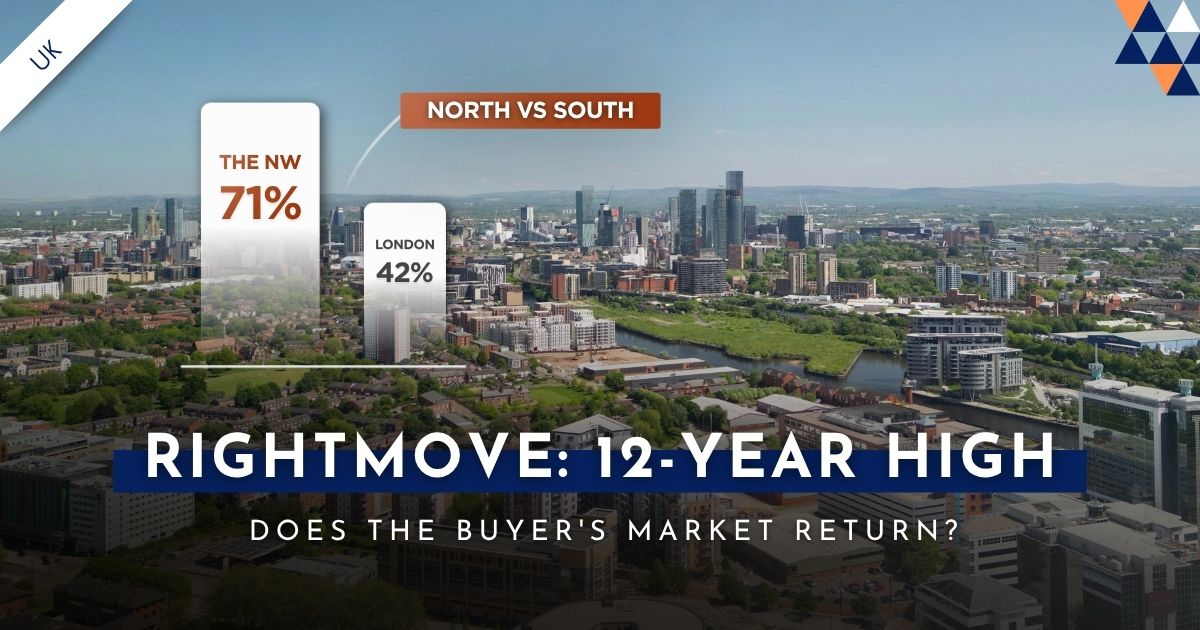
Record national choice doesn't mean every region behaves the same. Rightmove's data on how many listed homes are finding a buyer shows a stark north–south split.
The North West, Rothmore's core market, is converting listings into sales at a far healthier rate than the pricier, more affordability-stretched South. Where London sees fewer than half of homes find a buyer, the North West clears more than seven in ten. Northern regions such as Yorkshire & the Humber (asking prices up 1.3% this month) and the West Midlands (up 1.5% year-on-year) tell the same story: demand holds up best where prices are most affordable relative to incomes.
Quick FAQ:
Q: Does a buyer's market weaken the case for the North West?
A: The opposite. Buyers gain negotiating room everywhere, but the North West still sells faster and holds value better than the South, so investors get leverage without sacrificing liquidity.
Explore our full Manchester area guide, it provides property investors with a side-by-side breakdown of the 6 best districts, giving investors a clear picture about the city.

One figure cuts through the noise: 74% of homes that sold this year were priced right first time and never needed a reduction. In a crowded market, the homes that move are the ones priced to the local reality from day one, and the same discipline applies in reverse to buyers. Sellers clinging to summer valuations are the ones now sitting unsold, which is precisely where a prepared investor finds an opening.
The counterweight to all this choice is borrowing costs. The average two-year fixed rate has risen to 5.29%, up from 5.09% last month (Rightmove links the recent climb partly to wider geopolitical uncertainty). That keeps monthly budgets tight and is a large part of why demand has cooled.
There is a quieter signal worth noting, though: on Rightmove's figures, the typical first-time-buyer mortgage payment (around £1,199 a month) has slipped just below the equivalent rent (£1,297). When owning starts to undercut renting, the underlying demand that supports rental yields doesn't disappear; it simply waits for confidence and rates to settle.
Quick FAQ:
Q: Should investors wait for rates to fall before buying?
A: Timing rates precisely is guesswork. The stronger play is buying well now, using record choice to negotiate, so you're positioned for the autumn pick-up rather than chasing it once competition returns.
A market with this much supply rewards preparation over speed. Line up your finance early, know your numbers, and treat the current choice as a rare chance to be picky. Focus on locations where homes are still selling, the North West chief among them, and lean towards well-finished, competitively priced new-build apartments that let tenants in and rent collected without a refurbishment gap.
The bigger picture matters, three related pieces:
Fresh UK property market updates for investors - regeneration, yields, tax rules and monthly rental data, all in one hub. Read the latest here.

Frequently Asked Questions
Common questions on the current UK buyer's market, where homes are selling fastest, and what record supply and rising mortgage rates mean for property investors.
With homes for sale at a 12-year high and buyer demand around 9% lower than a year ago, buyers currently hold unusual negotiating power. For investors focused on strong-yielding areas such as the North West, the extra choice makes it a favourable window to buy well rather than to wait.
A quiet summer left more stock on the market while higher mortgage rates cooled buyer demand. Rightmove reports the number of homes available for sale is at a 12-year high for the time of year, creating strong competition among sellers.
Scotland leads, with around 91% of listed homes finding a buyer, followed by the North West at 71%. The South East (56%) and London (42%) lag behind, reflecting the more stretched affordability in the pricier South.
There is no guarantee. The average two-year fixed rate has risen to 5.29%, and Rightmove points to ongoing uncertainty. Investors are generally better served buying on strong fundamentals than trying to time precise rate movements.
More than at any time in over a decade. With homes for sale at a 12-year high and buyer enquiries down around 9% year-on-year, sellers are competing for fewer buyers, so well-prepared purchasers can push harder on price, timing and terms, especially on homes that have been listed a while.
Affordability. North West prices sit far below London's, so demand holds up even when borrowing costs are high, and around 71% of North West homes are finding a buyer against just 42% in London. That resilience supports both quicker sales and steadier rental demand.
Whether you're an investor or a homeowner, Rothmore Property provides expert guidance, market insights, and tailored solutions to support your property purchase.
Gain insights into property market trends, economic growth, and rental demand.

Rothmore specialises in connecting clients with the UK’s finest new-build developments.

Discover your property’s value with Rothmore. Our expert valuation services provide accurate assessments to support your next move.

Rothmore specialises in connecting clients with the UK’s finest new-build developments.